Living in Jordaan
Narrow streets, lopsided gables, real café culture, and a neighborhood feel where neighbors hold each other's keys.
What it's like
The Jordaan is a village that accidentally landed inside a major city. We live in 17th-century buildings four floors high and slightly tilted, monumental gates suddenly reveal hidden hofjes, and you keep running into the same people on the Lindengrachtmarkt every Saturday. It's the kind of place you don't move to, you get absorbed by.
What makes the Jordaan different is the scale. Streets narrow enough to wave at someone across without raising your voice. Houses leaning against each other to stay upright. The hofjes (Suykerhoff, Sint-Andrieshofje, Zon's Hofje) keep surprising even longtime residents. Walk into any side street between 10 and 6 and you might find yourself in a private 1650s garden.
The downside is rents are tightening. Under €850 for a room is rare in 2026, and what hits the market usually rents within three days. A lot of placements happen through personal networks, mouth-to-mouth works better than any platform here. If you get in via a friend or hospita on the corner, you're lucky. Otherwise: be fast.
Most rooms here are in old canal houses: deep and full of character, but with narrow staircases and usually no lift. Popular streets are the Bloemstraat, Willemstraat, Elandsgracht and the area around the Noordermarkt. Landlords are selective and often ask for a Dutch employment contract or proof of stable income, and many houses pick their new housemate themselves at a hospiteeravond (a viewing night where the current housemates decide together).
't Smalle on the Egelantiersgracht has been open since 1786 and is just where you go for Friday afternoon drinks. Café Chris (1624) and Papeneiland (smoked salmon and coffee, always) are the real classics. Eat at Balthazar's Keuken, Daalder, or Bistrot Neuf on Haarlemmerstraat. Noordermarkt on Saturday is organic, on Monday antiques. Vlaamsch Broodhuys for bread, Patisserie Holtkamp for cake.
People looking for character and willing to pay for the village-in-the-city feel. Lots of professionals 28-45, designers, established freelancers. Students too, often via family connections to a Jordaan property. Less suited if you need maximum quiet: narrow streets carry sound, and summer terraces run late.
Practical: groceries, transport, schools
Car: residents' permit averages 6-8 years wait. Garages on Westerstraat or Marnixstraat €300-450/month. Groceries: AH on Westerstraat, Vinkenstraat, and Westermarkt. AH To Go on the Lindengracht. Marqt at Westermarkt for organic. The greengrocer on Westerstraat is a neighborhood institution. Underground waste containers, daily collection.
Streets to know
Locals will mention these streets in conversation. Memorise them and you'll know what people are talking about within a week:
Getting around
Tram 13, 14 en 17 lopen door de Jordaan. Centraal Station is twaalf minuten lopen, vijf op de fiets. Westerpark voor groen, Vondelpark via de Leidsestraat.
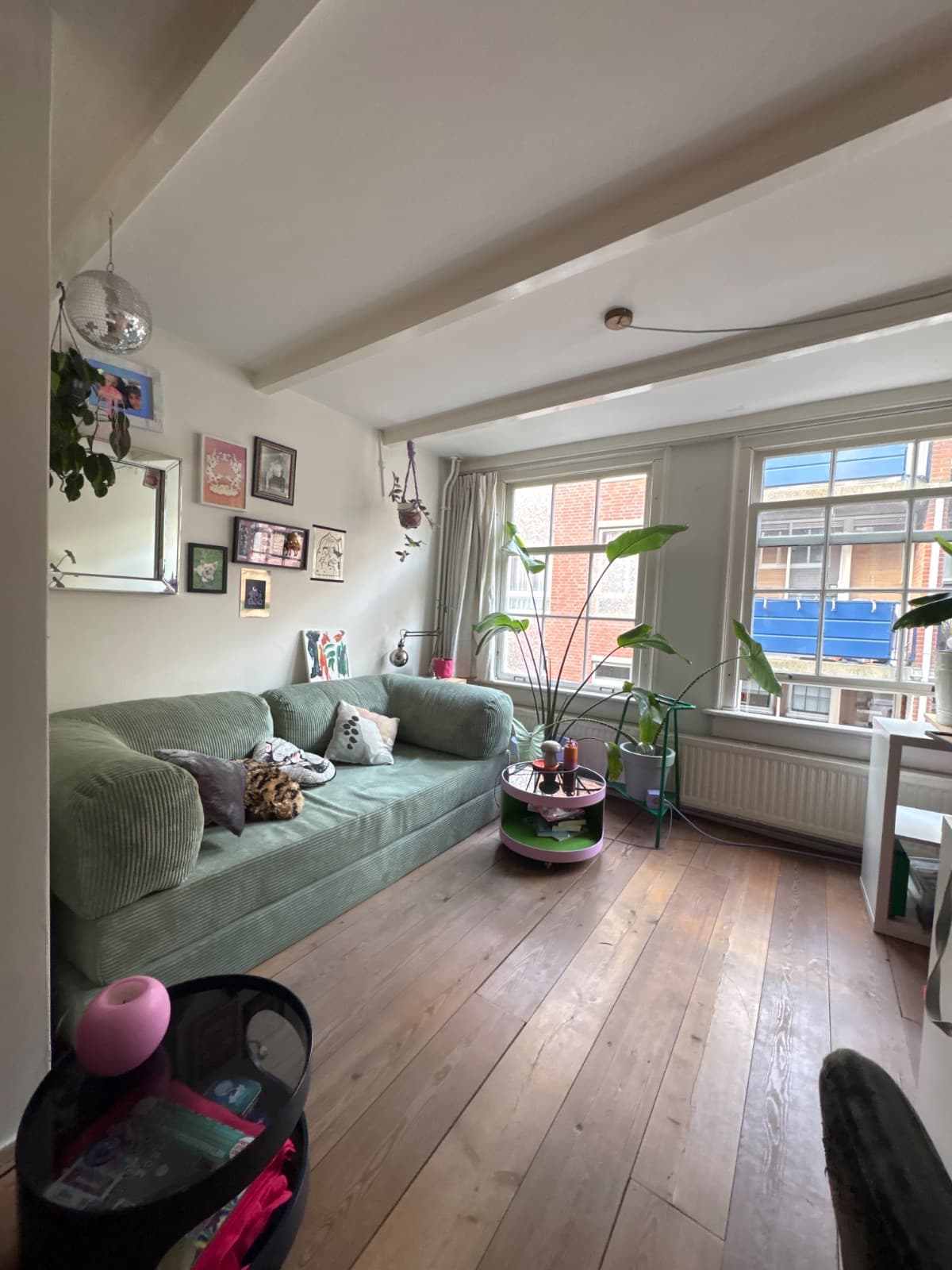
Live rooms in Jordaan
See all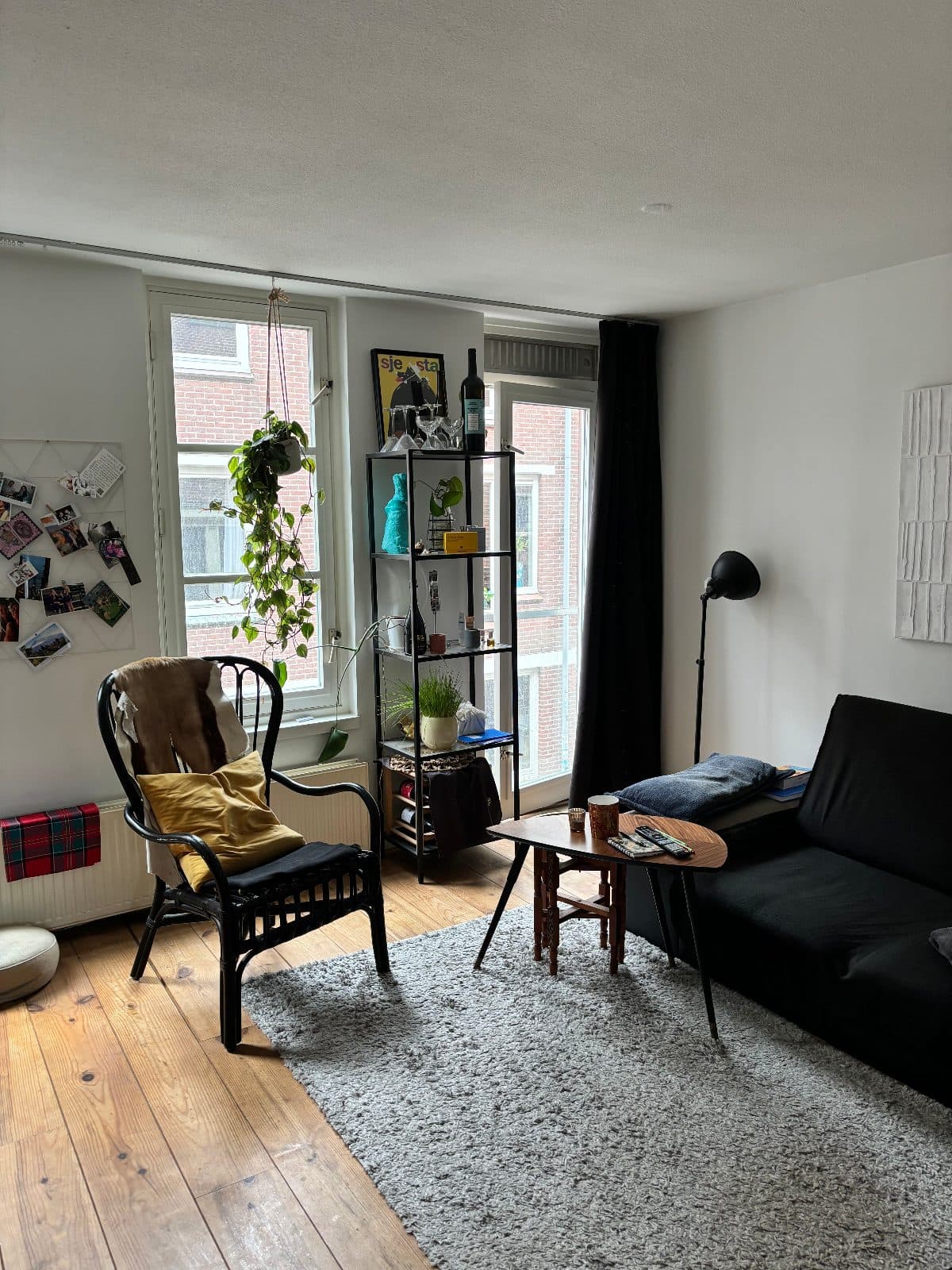
Common questions
What does a room in Jordaan cost in 2026?
Around €1103/month on average for a regular room. Smaller or shared rooms run lower, larger rooms with a balcony or canal view run €100-300 above the average. The number is verified against current Huismaatje listings and updated weekly.
Is Jordaan a good fit for me?
People looking for character and willing to pay for the village-in-the-city feel. Lots of professionals 28-45, designers, established freelancers. Students too, often via family connections to a Jordaan property. Less suited if you need maximum quiet: narrow streets carry sound, and summer terraces run late.
How do I get around from Jordaan?
Tram 13, 14 en 17 lopen door de Jordaan. Centraal Station is twaalf minuten lopen, vijf op de fiets. Westerpark voor groen, Vondelpark via de Leidsestraat.
Can I park a car in Jordaan?
Car: residents' permit averages 6-8 years wait.
What's the most useful tip for moving to Jordaan?
Most rooms here are in old canal houses: deep and full of character, but with narrow staircases and usually no lift. Popular streets are the Bloemstraat, Willemstraat, Elandsgracht and the area around the Noordermarkt. Landlords are selective and often ask for a Dutch employment contract or proof of stable income, and many houses pick their new housemate themselves at a hospiteeravond (a viewing night where the current housemates decide together).
Ready to find a room in Jordaan?
Live listings on the map. Direct contact with the host. No subscription, no fees.
See rooms in Jordaan